
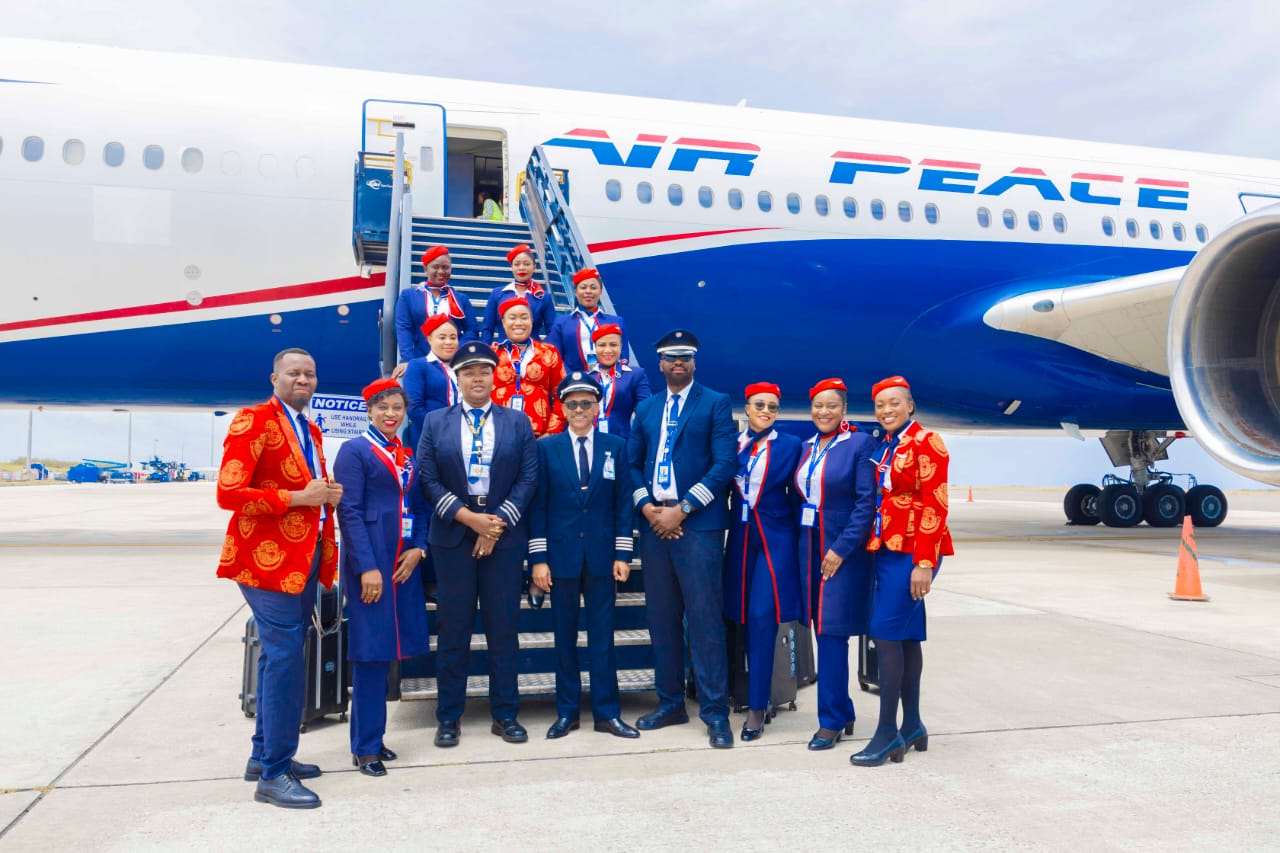
Former Senator and media entrepreneur, Ben Murray-Bruce, has thrown down a challenge that deserves serious reflection. His call on Nigerians to support Air Peace on the Nigeria-United Kingdom route is much more than an appeal for patronage of an airline. It is a call to economic patriotism, national pride and collective responsibility.
Air Peace is not merely an airline. It is the embodiment of vision, resilience and the audacious belief that Nigerian enterprises can stand shoulder to shoulder with some of the most established brands in global aviation.
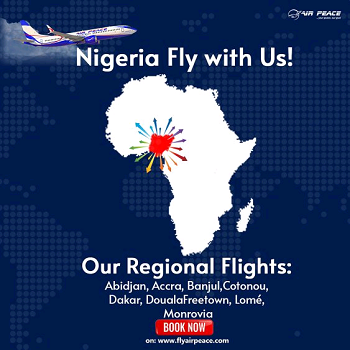
In an industry notorious for high capital requirements, fierce competition and regulatory complexities, few would have imagined that a privately-owned Nigerian airline would successfully break into one of the world’s most competitive markets and operate direct flights from Lagos and Abuja to London.
Yet, against the odds, Air Peace did just that.
Its founder, Dr. Allen Onyema, dared to dream. Through persistence, courage and immense sacrifice, that dream has become a symbol of what Nigerians are capable of achieving when vision meets determination.
The emergence of Air Peace on the London route is not simply a commercial success. It is a national achievement.
Indeed, Senator Ben Murray-Bruce was right when he declared that “Air Peace is not just flying to London; it is taking Nigeria with it.”
Across the world, citizens instinctively support their national carriers because they understand the broader economic implications.
Americans fly American Airlines, Delta and United.
Britons proudly support British Airways.
Emiratis have made Emirates a global symbol of Dubai and the United Arab Emirates.
Ethiopians regard Ethiopian Airlines as a source of national pride and have transformed it into Africa’s most successful airline.
Qatar Airways enjoys unwavering support from the State of Qatar and its people.
Singapore Airlines is almost inseparable from the national identity and global prestige of Singapore.
For citizens of these countries, patronizing their airlines is not merely a transportation choice; it is a way of life and an expression of economic nationalism.
Unfortunately, many members of Nigeria’s political, business and social elite have failed to imbibe this culture.
It is not uncommon to find top government officials, captains of industry and even those who preach economic diversification and local content opting almost reflexively for foreign airlines.
Such choices have consequences.
Every ticket purchased from a foreign airline contributes to capital flight.
Every seat left empty on Air Peace represents lost revenue, reduced capacity for expansion and fewer employment opportunities for Nigerians.
Supporting Air Peace means supporting Nigerian pilots, engineers, cabin crew, ground staff, caterers, travel agencies and countless businesses within the aviation value chain.
It means creating jobs.
It means retaining foreign exchange.
It means building indigenous capacity.
It means projecting Nigeria’s image and strengthening the country’s strategic economic interests.
This is why government must move beyond rhetoric and consciously encourage the patronage of Air Peace.
Public officials travelling on routes serviced by the airline should, where practicable, give preference to the country’s flag carrier.
Government agencies and institutions should formulate policies that promote indigenous carriers without compromising international standards and competitiveness.
Countries that dominate the global aviation industry did not achieve such feats by abandoning their own airlines to market forces while extending preferential support to foreign competitors.
They nurtured them.
They protected them.
They promoted them.
And they understood that strong national carriers are strategic national assets.
The success of Air Peace should not be viewed merely through the prism of aviation. It should be seen as part of the larger Nigerian story , a story of entrepreneurship, innovation and the capacity of Nigerians to excel on the world stage.
At a time when the country seeks economic renewal, industrial growth and increased national confidence, supporting Air Peace is not an act of charity.
It is an investment in Nigeria.
History shows that nations rise when their citizens deliberately support homegrown enterprises.
Air Peace has demonstrated courage. It has shown resilience.
It has carried the Nigerian flag into highly competitive skies.
Now, Nigerians, especially those in positions of influence, must answer a simple question:
If we do not believe in our own, who will?
For Air Peace is doing far more than connecting Lagos and Abuja to London.
It is carrying the hopes, aspirations and possibilities of a nation determined to take its rightful place among the comity of nations.
And that journey deserves the support of every Nigerian.
*Award winning writer, Zik Zulu Okafor, wrote in from Lagos*