
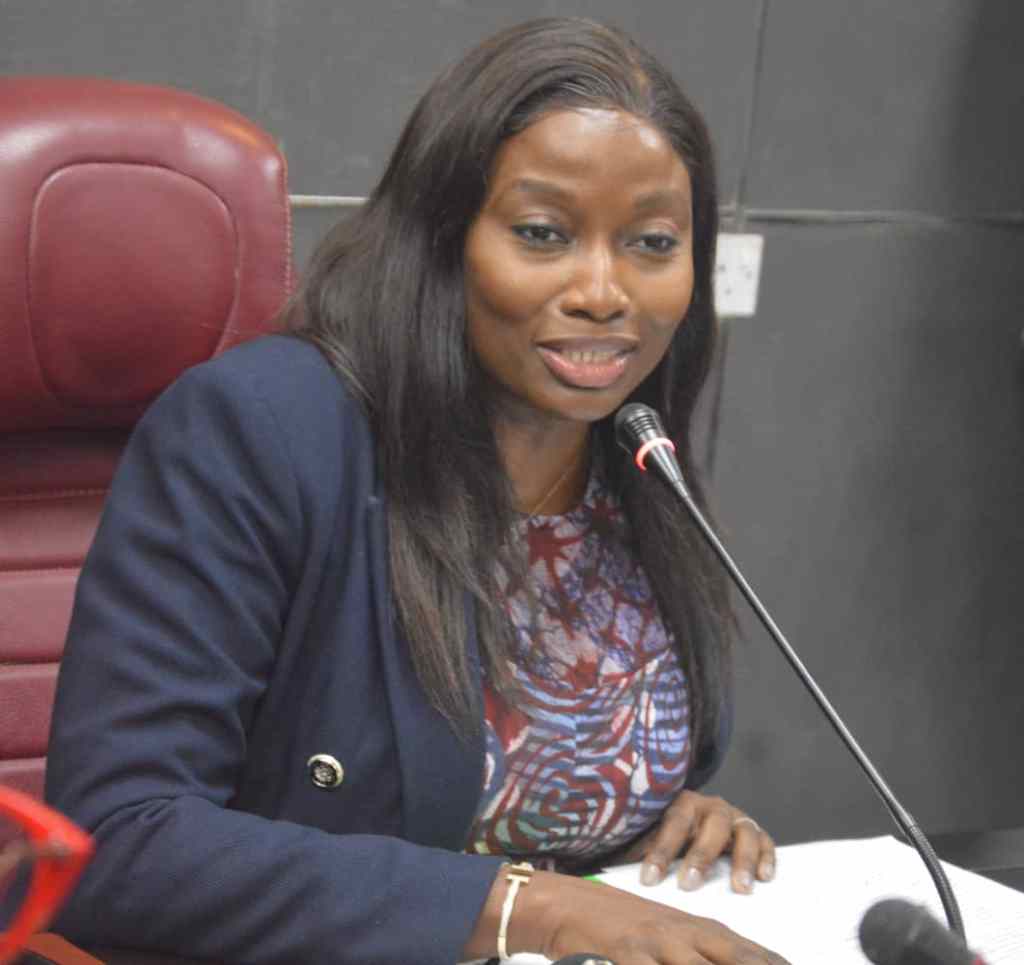
Managing Director/ Chief Executive,
Federal Airports Authority of Nigeria (FAAN)
The Managing Director’/ Chief Executive, Federal Airports Authority of Nigeria (FAAN), Mrs Olubunmi Kuku has vowed that within 24 months, her management would deliver a new state of the art, technology driven terminal building to replace the burnt terminal at Murtala Muhammed International Airport Lagos.
She made the vow during an interview monitored by African Business Travel News (ABTNEWS) on CNBC Africa over the weekend.
Kuku who also spoke on the recent directive of President Bola Ahmed Tinubu on the suspension of cashless policy at Abuja and Lagos Airports tollgates and fire incident at the terminal one of the Lagos international airport, noted that the developments have enable her management team to return to the drawing board and engage in better strategies that would deliver globally acceptable structures that will enhance quality service delivery at the airport.
“I consider this a big win for the industry because it gives us more time to pilot, transition and put in the necessary infrastructure.
“No, that is important. That’s getting to the big picture now, what we’re trying to achiev.
“And this is actually one of the things that we’re doing as part of the rehabilitation work that is happening. I’d like to get to that and where we are at correctly. Honestly, I did a 22 to 24 months timeline given here and also with some fire incident that happened recently.
Kuku who confirmed that some of the high-tech equipment set to be removed to the new temporary site were affected by the fire outbreak, noted that the overall impact of the fure were minimally on the entire operations and would not alter the timeline for the delivery of the rehabilitated terminal.
“So yes, we did have a fire incident that happened last week. I believe it was last week Monday. It did have a bit of an impact, but I would say that it was minimal. So the impact was really on some of our technology that we were moving. So technology had where we were moving from the terminal one into the temporary terminal and terminal two. But the good news is that we were actually planning on leaving that terminal.
“So Wednesday was the last day for us to leave the terminal. So it’s just about a two day setback. We had manual operations and manual checking for about four or five days,” she explained.
The FAAN Chief Executive who said the airport has since restored full uninterrupted operations while the construction works progress with inhibition, insisted that nothing would alter the stipulated timeline for the delivery of the reconstructed terminal building.
.“We’ve now been able to restore our operations back to normal. Now, in terms of the rehabilitation itself, yes, the 22 to 24 months still stands.” she vowed.
The Managing Director of FAAN disclosed that the temporary terminal has become operational to take burden off the shoulder of terminal two/
“As of November, if you’re passing through the airport area, we actually have now activated the temporary terminal.
:So there’s a temporary terminal that has been built. I’m going to have it at the International Airport. There are four airlines that have moved into that terminal.
“So Middle East, I believe Air France, KLM, and Ethiopian have all moved in there. This is a temporary facility that was built within a three month period,” Kuku said.
On what to expect at the completion of the project, Kuku said FAAN is set to bequeath the nation with a terminal that would make Nigeria the most sought after destination with the best transit facility in the entire West and Central Africa regions.
“Because I look at this as trying to hit an elephant and where do we start from talking about our regional hub foundations and also the rehabilitation of the airports here. And I’m thinking how do we compete, where do we start and how are we getting there. So Nigeria, and especially the Murtala Muhammed Airport is one of the busiest airports across Africa.
“But I will start by saying that if you look at the likes of Cairo, so look at the Cairo International Airport and then look at the Oliva Tambo in Johannesburg, they’ve done something that works extremely well, so actually it’s three of them. So look at Oliva Tambo, look at Addis and then look at Cairo. What works extremely well for them is the fact that they’ve not just made their airports a destination for passengers who are coming into their country, but they’ve made it a hub.
“And what does that mean? Because a lot of people use the terminology hub very loosely. A hub is literally an environment or an airport environment where you’re able to have transit passengers move from one location to the other without necessarily making that country their end destination. In Nigeria, for example, and when you look at the key factors that drive passenger traffic, the biggest is GDP.
“When you look at the GDP of the Nigerian population and you compare it to our passenger traffic, it’s actually very low, it’s less than 2%. And what that means is that a lot of the passengers that are a lot of the Nigerian passengers are not traveling in contrast to all of the other areas. For us to be able to drive passenger traffic effectively, it means that you need to do a couple of things,” she asserted.
She explained further, “you need to either improve the business environment where there’s a lot of trade activities that is happening that bring people into the country or even the economic activity. So whether it’s tourism, whether it’s business activity. But when we start to look at the hub, we really see the future in two things.
“One is in driving the hub strategy and the second is also in for both passenger and cargo. To make the hub strategy effective, a couple of things need to happen. It’s not just about developing an airport or building infrastructure.”
She however said that other enablers must be put in place if Nigeria really wants to catch in on the advantages of having a hub.
“But it really requires that we look at the enablers. And what are these enablers? For example, look at the airlines. So for us to be able to increase our aircraft movements and have additional points of entry, we look at the bilateral air service agreements that we have with other countries,” Kuku advised.