

Below is the communique issued at the end of CITA Energies colloquium organised by League of Airport and Aviation Correspondents (LAAC) and held on Thursday October 23, 2025 at Raddison Blu Hotel, Ikeja GRA, Lagos.
The colloquium with themed: Aviation Fuel Business in Nigeria: Scenario and Metaphor was a gathering of seasoned experts in the Jet A1 subsector of the aviation industry who spoke to the theme.
Speakers were: Chief Executive Officer of CITA Energies Limited, and whose 55th birthday celebration was an highlight of the colloquium, Dr. Thomas Ogungbangbe; former Managing Director of Arik Air, Managing Director, Ndano Energy who was also the Chairman of the occasion, Mr. Chris Ndulue; former Managing Director of Federal Airports Authority of Nigeria (FAAN) and Co-Founder, Geometric Aviation Synergy Services, Dr. Richard Aisuebeogun and former Managing Director of ADC Plc, Capt. Augustine Okon,
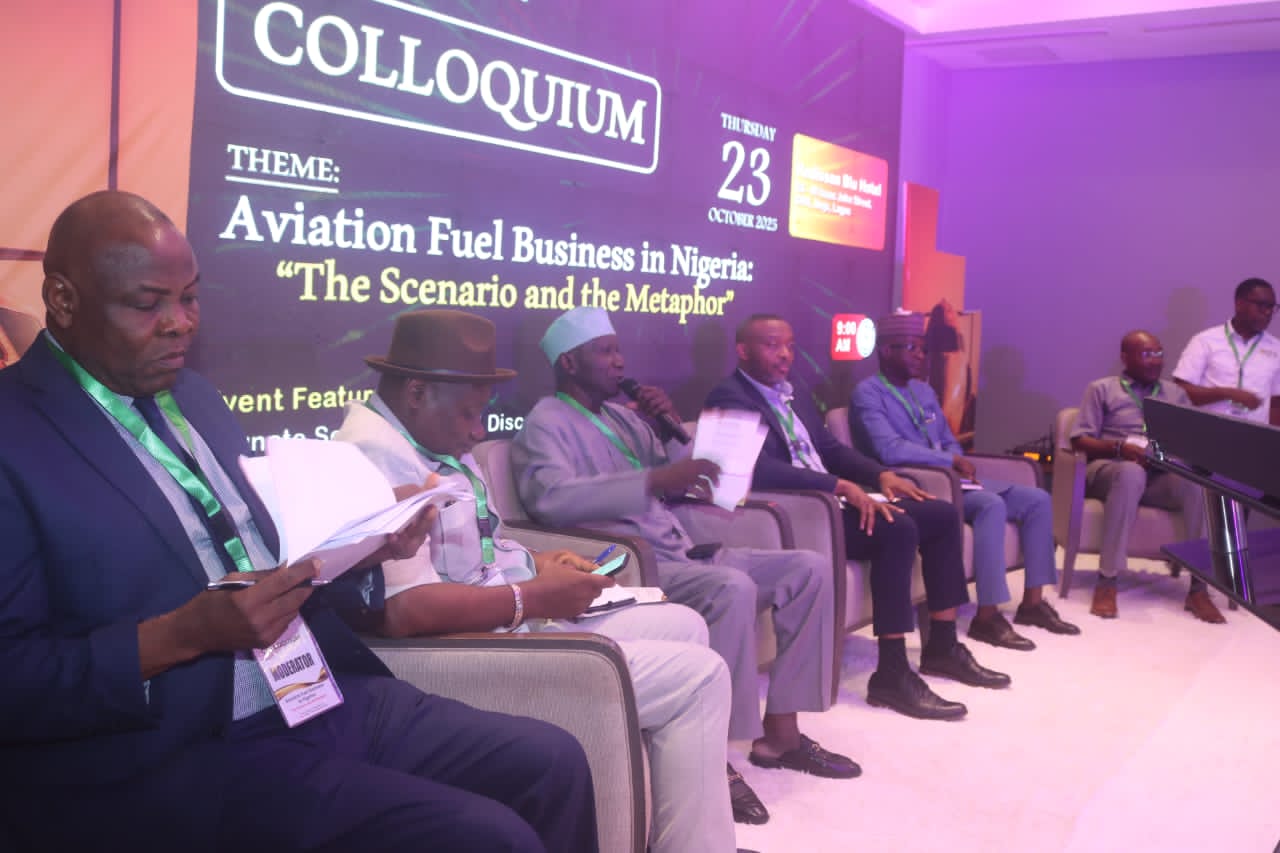
The colloquium also featured the insightful contributions of a five man discussion panel session moderated by Mr. Ajibola Olayinka.
The panelists were, a former Air Force Commandant, Murtala Muhammed International Airport (MMIA), Lagos and Mallam Aminu Kano International Airport (MAKIA), Kano, Group. Captain. John Ojikutu (Retired); General Manager, Operations, Octavus, Engr. Peter Dia; CEO Mangrove Hills, Dr. Betiku Olasimbo; Managing Director, COLT Engineering, Engr. John Abegunde and Regional Manager, Lagos and West Africa, Ibom Air, Mr. Martin Abhulimen.
The discussions at the colloquium was dominated by the roles of aviation fuel, its pricing, availability, quality and regulations, among others.
The gathering provided yet another opportunity for players and experts in the aviation fuel subsector to appraise lingering issues in the business, provided steps needed to optimize the value chain and interventions needed maintain global standards.
Arising from the inputs at the gathering which featured paper presentation and a panel discussion session, the following resolutions were adopted by the participants:
There is a need to revamp aviation fuel infrastructure across Nigeria’s airports to improve the availability and distribution of aviation fuel to airlines.
Government should take deliberate measures to devise a less cumbersome and expensive aviation fuel distribution method that will keep trucks away from the roads while ensuring quality, enhancing availability and minimizing safety challenges posed by congestion of fuel trucks at the airports and at the same time, minimizing losses created by the current distribution method and chain.
Participants also resolved that there should be provisions for aviation fuel storage facilities such as tank farms locations in the master plans of airports constructiion. They insisted that fuel hydrants should be installed at the existing and new airports.
Since jet fuel constitutes 40 per cent of airlines operating costs and the price and access to jet A1 negatively affects airlines operators and profitability, participants agreed that it is important for aviation and fuelling authorities to address issues of quality, availability and pricing of jet fuel to guarantee the survival of airlines.
The participants also observed that since the subsector operate a free market system, they resolved that existing gaps in jet fuel marketing and the existing human capacity, should be addressed to guarantee efficiency, quality and safety of jet fuel used by airlines, while regulatory bodies should pay more attention to the economic regulation of Jet A1 marketers.
The participants also resolved that the Federal Government must ensure stability of foreign exchange rate so as to guarantee the survival of both airlines and jet fuel marketing subsectors of the aviation industry.
The meeting resolved that airlines should factor the cost of jet fuel into their Aircraft, Crew, Maintenance, and Insurance (ACMI) so as to determine a realistic cost of operations.
The participants also resolved that Nigerian Midstream and Downstream Petroleum Regulatory Authority (NMDPRA), Directorate of Petroleum Resources (DPR), Nigeria Civil Aviation Authority (NCAA) and fuel marketers should collaborate to minimize other costs of operation outside landing costs. They canvassed the reduction of costs such as trucking, demurrage, delayed paymentvand among others, to ensure profitability and survival of the subsectors.
Participants which applauded the establishment of Dangote Refinery and the impact it has made so far on jet fuel availability, however demanded compliance with international standards in regular inspection procedures and measures towards breaking monopoly in the business of refining jet fuel so as to ensure sustained quality and avoid market manipulation.
Considering the required international standards of production and maintenance and expensive nature of investment in jet fuel quality, the participants agreed that modular refineries cannot meet such conditions contrary to opinion held in some quarters that modular refineries should serve as alternatives to Dangote refinery.
Participants made much emphasis on the need for aviation and petroleum regulators and operators to ensure product integrity and quality assurance in the interest of safety and survival of both airlines and marketers.
They also resolved that there is a need for a dedicated jet fuel regulatory framework.
The participants resolved that there is the need for the industry to be futuristic in its approach. They suggested the need to explore opportunities of embracing Sustainable Aviation Fuel (SARF), an emerging global trend that may become dominant in future.
They also resolved that fuel marketers should champion collaboration among airlines on fuel to bring down prices and ensure quality of jet fuel used by airlines.
They pass the resolution on a need to build a jet fuel subsector that mirrors the best of Nigeria with the resilient They argued that Nigerian spirit, driven on the platform of innovation such that every litre of jet fuel in an aircraft symbolizes a promise that each aircraft departing from point A to B carries the strength and reliability of the Nigerian spirit.